Skip to content

Australia Banned Social Media for Under‑16s. Europe Moved. Why Calling This “Personal Responsibility” Is Neglect.

Other countries are redesigning the system. We’re still asking kids to out‑discipline billion‑dollar platforms. That’s not freedom. That’s neglect.

Australia didn’t wait. It put real guardrails on social media for kids under 16.

France moved. Denmark moved. Norway moved. New Zealand is moving.

They’re making the same call: children shouldn’t be test subjects for engagement algorithms.

Meanwhile, we argue. We study. We delay—while classrooms fracture, attention collapses, and anxiety spikes.

When we frame this as “personal responsibility,” we’re effectively telling kids to out‑discipline billion‑dollar platforms designed to win their attention.

That’s not freedom. That’s neglect.

What’s happening around the world

What these countries actually did (and what’s happening next)

This isn’t one headline. It’s a pattern: governments are moving from “awareness” to “enforcement,” targeting the system—age checks, platform duty, and default protections.

Australia

Australia: under‑16 social media age restrictions are now in force

As of December 10, 2025, many major platforms are not allowed to let Australians under 16 have accounts. The law puts the obligation on platforms (with major fines), not on families.

The stated aim is to protect young people from design features that encourage excessive use and expose them to harmful content.

France

France: lawmakers approved an under‑15 ban proposal (Senate next)

In late January 2026, France’s National Assembly backed legislation to ban under‑15s from social media. The bill then moves through the Senate process before becoming law.

The point is clear: France is trying to make age limits enforceable, not just “click to confirm.”

Denmark

Denmark: political agreement to restrict social media under 15

Denmark’s government announced a political agreement to ban access to social media for children under 15, with reported carve‑outs that may allow parental permission for ages 13–14. The measure is part of a broader push to reduce harms and pressure platforms into real age assurance.

Norway

Norway: moving forward with an absolute 15‑year age limit proposal

Norway’s government has been developing legislation for an absolute minimum age limit of 15 for social media, including a public consultation proposal in 2025. The stated goal is to protect children from harmful content, abuse, commercial exploitation, and misuse of personal data.

New Zealand

New Zealand: proposing an under‑16 ban

New Zealand’s prime minister proposed banning children under 16 from social media, with a model that would require platforms to verify age and face fines for noncompliance.

The trendline is the story

Even beyond these countries, more governments are proposing under‑16 restrictions and tighter age verification. The message is shifting from “parental controls” to “platform responsibility.”

Why they’re moving

Why they’re moving: it’s the design, not just the screen

Most kids don’t “choose” to stop. Platforms are built to keep them looping:

  • Infinite scroll and autoplay remove stopping points
  • Notifications train constant checking and task‑switching
  • Algorithmic feeds personalize temptation
  • Social pressure makes “log off” feel like social exile

So yes—time matters. But design matters more. This is why governments are treating it like a public safety and child development issue.

What schools can do now

What schools can do now (even before national laws change)

This is where school safety policies can evolve into something practical: a School SafeZone approach that protects learning time and reduces real‑time digital harm.

School safety best practices that work in the real world:

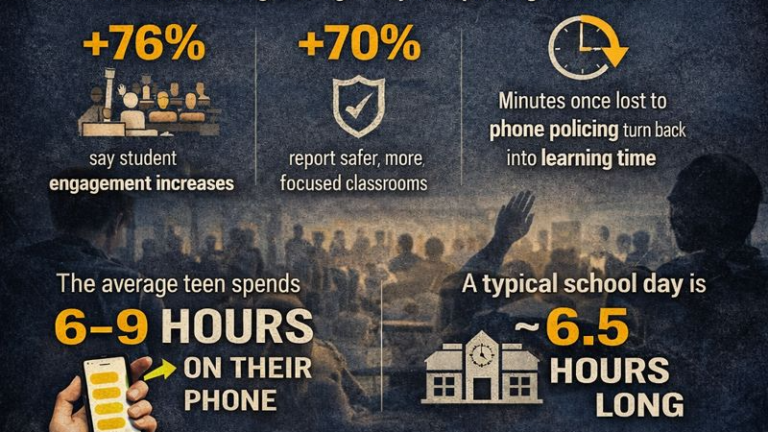
  • Clear phone boundaries during instructional time (bell‑to‑bell, pouches/lockers, or structured phone‑free blocks)
  • Simple enforcement that doesn’t turn teachers into phone police
  • Bullying prevention in schools with rapid reporting and response pathways
  • Staff safety training schools focused on consistency and de‑escalation
  • Parent alignment so rules don’t collapse the minute there’s pushback

That’s how you build a safe school environment and safe classrooms for students.

What parents can do

School safety tips for parents

If your school tightens device rules, help it stick:

  • Agree on a school‑hours contact plan (front office, not texting your child)
  • Turn off nonessential notifications before school
  • No group chats during school hours
  • Back the policy publicly—even if your child complains

This is child safety in schools in 2026: reducing the conditions that let digital drama spill into the day.

Leaders and policymakers

Leaders and policymakers: stop outsourcing this to kids

The countries moving fastest are making one big bet: the system can be redesigned with enforceable age limits and platform accountability.

You don’t have to agree with every detail to see the core point: expecting children to self‑regulate against persuasive design is a losing strategy.

Ready to move from debate to action?

School SafeZone exists to help schools and families draw a clear line.

We help communities implement practical boundaries that protect learning time and reduce real‑time digital harm—so school feels safe again.

If you want to help your district move from debate to action, join the community.

More Social Media, Less Focus: The Longitudinal Study Parents and Schools Can’t Ignore

A new multi‑year study found that more social media use predicted rising inattention symptoms over time—even after accounting for genetics. Small effect per child. Big impact at scale.

What’s happening to our kids’ attention?

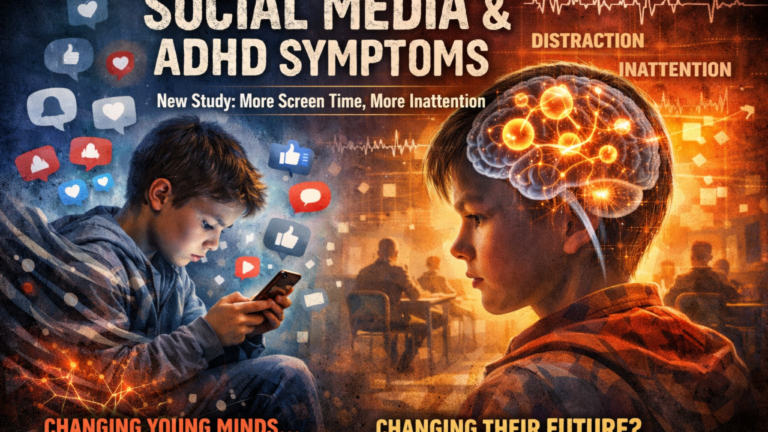
A major longitudinal study following thousands of children for four years found that more social media use was associated with a gradual increase in inattention symptoms over time—even after researchers accounted for genetics and baseline behavior.

The effect is small for any one child. But when millions of kids are exposed to the same design patterns every day, small effects can turn into a big shift in the “normal” level of focus across classrooms, schools, and entire communities.

This isn’t academic. It’s a warning sign for every parent, educator, policymaker, and leader: our digital environment may be reshaping young brains—and the future of focus itself.

What the longitudinal study found

What the study actually found (in plain language)

The research drew from the Adolescent Brain Cognitive Development (ABCD) Study and followed 8,324 children (starting around age 9–10) over four years. Kids reported how much time they spent on different types of digital media. Parents reported attention and behavior symptoms annually.

Here’s the key result: average social media use predicted increased inattention symptoms over time, with a cumulative effect across four years. TV/videos and video games did not show the same pattern.

Researchers also estimated genetic predisposition using a polygenic risk score and found the social media → inattention association was not explained away by genetics.

Translation: this pattern showed up even after accounting for “kids who were already wired this way.”

Why this matters for a safe school environment

Why “small effects” can be huge

If one child’s focus slips a little, you might not notice. But at scale, it changes:

  • how long a class can stay on task
  • how often teachers have to redirect attention
  • how much learning time gets lost to distraction
  • how stressful the environment feels for students who are trying to focus

That’s why this is a safe school environment issue. A classroom where attention is constantly fragmenting becomes less predictable, more emotionally charged, and harder for students—especially neurodivergent kids—to feel secure and engaged.

It’s not just time—it's the pull of platforms

It’s not just “screen time.” It’s the pull of platforms.

Social media isn’t built like a textbook or a documentary. It’s engineered for repeat engagement. Some of the biggest attention-draining drivers include:

  • Intermittent rewards (likes, comments, streaks) that keep the brain “checking”
  • Infinite scroll and autoplay that remove natural stopping points
  • Notifications that train constant task-switching
  • Algorithmic feeds that personalize temptation to the user

So when we talk about student safety at school and child safety in schools, we have to include the digital layer—because attention is part of safety. When focus collapses, learning suffers and behavior issues rise.

What schools can do right now

Ways to improve school safety: protect attention during school hours

This is where school safety policies need to evolve. Not as punishment—but as protection. Here are practical school safety best practices that schools can implement without turning the campus into a police state.

1) Create phone boundaries that protect safe classrooms

1) Build a clear school phone policy that creates “safe classrooms for students”

Policies like “bell to bell,” pouches, lockers, or structured phone-free blocks work best when they’re simple, consistent, and supported by parents.

Think of it as how to create a safe zone in schools: a predictable boundary where students can focus without social pressure, constant checking, or group-chat drama.

2) Add attention protection to school safety programs

2) Treat attention as part of school safety programs

Most school safety programs focus on physical risk. Add attention protection as a prevention layer:

  • digital distraction education (short, practical, not preachy)
  • teacher-friendly classroom norms that reduce device conflict
  • support for students with higher vulnerability to distraction

This strengthens school safety awareness and improves day-to-day climate.

3) Train staff to reduce conflict and improve consistency

3) Train staff to handle digital distraction without escalation

Staff safety training schools should include de-escalation and consistency around devices. Students test boundaries. If enforcement is inconsistent, conflict rises. If it’s predictable, tension drops.

Include:

  • simple scripts teachers can use
  • clear referral paths (so teachers aren’t “the bad guy”)
  • a consistent consequence ladder

What parents can do

School safety tips for parents: focus protection starts at home

Parents ask, “how schools keep students safe.” Here’s the other half: what home can do to make school policies actually work.

School safety checklist for parents (attention edition):

  • Turn off non-essential notifications (especially social apps)
  • No group chats during school hours
  • Phone sleeps outside the bedroom
  • Create a “stop point” rule (no infinite scroll before homework)
  • Model it—kids follow what they see

If you’re wondering about signs a school is unsafe in the digital era: watch for chronic distraction, constant phone conflict, and a culture where online drama runs the campus.

What is a School SafeZone program?

What is a school safe zone program?

A School SafeZone program is a practical framework for creating safe schools where attention and learning are protected:

  • clear school safe zone rules and guidelines for devices during school hours
  • simple enforcement that reduces conflict
  • parent-school alignment so policies stick
  • education that explains “why,” not just “no”

In short: we’re building safe schools for children by protecting the conditions that make learning possible—starting with attention.

Rethink, regulate, redesign

Leaders and policymakers: redesign the environment, not just the child

Kids shouldn’t be expected to out-discipline billion‑dollar engagement systems. The solution is not blame—it’s redesign and guardrails:

  • stronger age verification and default protections for minors
  • limits on manipulative notification practices
  • more transparency about how feeds are optimized

We can rethink, regulate, and redesign how digital media fits into childhood. Protect attention before it’s too late.

Ready to protect attention at school?

School SafeZone exists to help schools and families draw a clear line.

We support schools in building practical device boundaries that protect learning time and reduce real-time digital harm—so school feels safe again.

If you’re ready to move from concern to action, join the community.

More Social Media, Less Focus: The Longitudinal Study Parents and Schools Can’t Ignore

A new multi‑year study found that more social media use predicted rising inattention symptoms over time—even after accounting for genetics. Small effect per child. Big impact at scale.

What’s happening to our kids’ attention?

A major longitudinal study following thousands of children for four years found that more social media use was associated with a gradual increase in inattention symptoms over time—even after researchers accounted for genetics and baseline behavior.

The effect is small for any one child. But when millions of kids are exposed to the same design patterns every day, small effects can turn into a big shift in the “normal” level of focus across classrooms, schools, and entire communities.

This isn’t academic. It’s a warning sign for every parent, educator, policymaker, and leader: our digital environment may be reshaping young brains—and the future of focus itself.

What the longitudinal study found

What the study actually found (in plain language)

The research drew from the Adolescent Brain Cognitive Development (ABCD) Study and followed 8,324 children (starting around age 9–10) over four years. Kids reported how much time they spent on different types of digital media. Parents reported attention and behavior symptoms annually.

Here’s the key result: average social media use predicted increased inattention symptoms over time, with a cumulative effect across four years. TV/videos and video games did not show the same pattern.

Researchers also estimated genetic predisposition using a polygenic risk score and found the social media → inattention association was not explained away by genetics.

Translation: this pattern showed up even after accounting for “kids who were already wired this way.”

Why this matters for a safe school environment

Why “small effects” can be huge

If one child’s focus slips a little, you might not notice. But at scale, it changes:

  • how long a class can stay on task
  • how often teachers have to redirect attention
  • how much learning time gets lost to distraction
  • how stressful the environment feels for students who are trying to focus

That’s why this is a safe school environment issue. A classroom where attention is constantly fragmenting becomes less predictable, more emotionally charged, and harder for students—especially neurodivergent kids—to feel secure and engaged.

It’s not just time—it's the pull of platforms

It’s not just “screen time.” It’s the pull of platforms.

Social media isn’t built like a textbook or a documentary. It’s engineered for repeat engagement. Some of the biggest attention-draining drivers include:

  • Intermittent rewards (likes, comments, streaks) that keep the brain “checking”
  • Infinite scroll and autoplay that remove natural stopping points
  • Notifications that train constant task-switching
  • Algorithmic feeds that personalize temptation to the user

So when we talk about student safety at school and child safety in schools, we have to include the digital layer—because attention is part of safety. When focus collapses, learning suffers and behavior issues rise.

What schools can do right now

Ways to improve school safety: protect attention during school hours

This is where school safety policies need to evolve. Not as punishment—but as protection. Here are practical school safety best practices that schools can implement without turning the campus into a police state.

1) Create phone boundaries that protect safe classrooms

1) Build a clear school phone policy that creates “safe classrooms for students”

Policies like “bell to bell,” pouches, lockers, or structured phone-free blocks work best when they’re simple, consistent, and supported by parents.

Think of it as how to create a safe zone in schools: a predictable boundary where students can focus without social pressure, constant checking, or group-chat drama.

2) Add attention protection to school safety programs

2) Treat attention as part of school safety programs

Most school safety programs focus on physical risk. Add attention protection as a prevention layer:

  • digital distraction education (short, practical, not preachy)
  • teacher-friendly classroom norms that reduce device conflict
  • support for students with higher vulnerability to distraction

This strengthens school safety awareness and improves day-to-day climate.

3) Train staff to reduce conflict and improve consistency

3) Train staff to handle digital distraction without escalation

Staff safety training schools should include de-escalation and consistency around devices. Students test boundaries. If enforcement is inconsistent, conflict rises. If it’s predictable, tension drops.

Include:

  • simple scripts teachers can use
  • clear referral paths (so teachers aren’t “the bad guy”)
  • a consistent consequence ladder

What parents can do

School safety tips for parents: focus protection starts at home

Parents ask, “how schools keep students safe.” Here’s the other half: what home can do to make school policies actually work.

School safety checklist for parents (attention edition):

  • Turn off non-essential notifications (especially social apps)
  • No group chats during school hours
  • Phone sleeps outside the bedroom
  • Create a “stop point” rule (no infinite scroll before homework)
  • Model it—kids follow what they see

If you’re wondering about signs a school is unsafe in the digital era: watch for chronic distraction, constant phone conflict, and a culture where online drama runs the campus.

What is a School SafeZone program?

What is a school safe zone program?

A School SafeZone program is a practical framework for creating safe schools where attention and learning are protected:

  • clear school safe zone rules and guidelines for devices during school hours
  • simple enforcement that reduces conflict
  • parent-school alignment so policies stick
  • education that explains “why,” not just “no”

In short: we’re building safe schools for children by protecting the conditions that make learning possible—starting with attention.

Rethink, regulate, redesign

Leaders and policymakers: redesign the environment, not just the child

Kids shouldn’t be expected to out-discipline billion‑dollar engagement systems. The solution is not blame—it’s redesign and guardrails:

  • stronger age verification and default protections for minors
  • limits on manipulative notification practices
  • more transparency about how feeds are optimized

We can rethink, regulate, and redesign how digital media fits into childhood. Protect attention before it’s too late.

Ready to protect attention at school?

School SafeZone exists to help schools and families draw a clear line.

We support schools in building practical device boundaries that protect learning time and reduce real-time digital harm—so school feels safe again.

If you’re ready to move from concern to action, join the community.

AI “Nude” Deepfakes Are Hitting Middle Schools. School Safety Policies Need to Catch Up.

One image can trigger a group‑chat pile‑on and show up on campus before adults can react. This isn’t a culture war. It’s student safety at school.

California just made it clear this is not theoretical.

California’s Attorney General announced an investigation and sent a cease‑and‑desist demand tied to xAI’s Grok being used to generate and spread nonconsensual sexual “undressed” deepfake images, including content involving minors.

Meanwhile, reporting has shown how “AI nude” cyberbullying is already landing inside middle schools: one image turns into a group‑chat pile‑on, then it’s on campus before adults can react.

That’s why “school phone policy,” “phone‑free schools,” and “student digital safety” aren’t culture‑war buzzwords anymore. They’re harm‑reduction.

When students have always‑on access during the school day to DMs, group chats, and instant reposting, harassment spreads at algorithm speed. A safe school environment now includes digital safety, not just physical security.

This is a school safety issue, not a tech novelty

This is a school safety issue, not a tech novelty.

Most schools already have school safety programs, school safety awareness campaigns, and school safety training. But many school safety policies were written for a different internet.

AI deepfake abuse breaks the old playbook because it is:

  • Fast: created and shared in minutes
  • Scalable: one image can reach a whole grade instantly
  • Weaponized: used for humiliation, coercion, and cyberbullying
  • Sticky: screenshots and reposts keep it alive

This is child safety in schools in 2026. It affects mental health, attendance, learning, and whether students feel they’re in safe classrooms for students.

What schools can do right now

If you want student safety at school to be real—not just a poster—this is the baseline.

1) Update safety policies for schools to explicitly cover AI sexual harassment

Your policy should name it plainly:

  • AI‑generated intimate images
  • nonconsensual “undressing” edits
  • distribution, solicitation, and threats to distribute

Tie it directly to student protection guidelines and consistent discipline pathways. If you don’t name it, you can’t enforce it consistently.

2) Build a response protocol that moves faster than the group chat

This is school risk management. The goal is to stop spread, support the target, and preserve evidence.

Minimum protocol:

  • One reporting channel for students and parents
  • Immediate containment steps (who contacts platforms, who secures evidence)
  • Victim support steps (counseling, schedule safety, no‑contact plans)
  • Clear escalation criteria (when threat assessment in schools and law enforcement is required)

3) Train staff for the new reality

“Staff safety training schools” can’t be only about doors and drills.

Add modules to school safety training on:

  • How AI deepfakes work at a basic level
  • How schools prevent bullying when content is digital and viral
  • How to respond without blaming the victim
  • How to document and preserve evidence

4) Pair digital policies with real school security measures

Yes, keep the essentials: campus supervision, visitor procedures, and violence prevention in schools.

But also treat the phone like a vector. If phones are the distribution engine during school hours, your safety policies for schools need a time‑and‑place boundary.

This is where school safe zone rules and guidelines matter: what’s allowed, when, where, and what happens when it’s violated.

What parents can do

Parents keep asking “how schools keep students safe” and “signs a school is unsafe.” Here’s a clean lens.

Ask your school these questions:

  • Do your policies explicitly cover AI‑generated nude images and distribution?
  • What is the reporting process, and how fast do you act once notified?
  • Do you have a documented protocol (not just “talk to the counselor”)?
  • Do students have anonymous reporting options?
  • What training do staff receive on cyberbullying and AI deepfakes?

School safety tips for parents that actually help:

  • Set a rule: no group chats during school hours
  • Teach “do not forward” as a hard line (forwarding is participating)
  • Screenshot for reporting, then stop engagement
  • If your child is targeted: document, report, and push for immediate containment

This is child protection in schools plus at home. It’s how we get to safe schools for children in a world where a photo can be turned into a weapon.

What is a school safe zone program

A school safe zone isn’t a slogan. It’s a clear operating system for creating safe schools.

It means:

  • A defined policy boundary for devices during the school day
  • Simple enforcement that doesn’t rely on perfect self‑control
  • A rapid response plan for digital incidents
  • Parent‑school alignment so consequences are predictable

In other words: how to create a safe zone in schools that protects learning time and reduces real‑time digital harm.

Why School SafeZone exists

School SafeZone exists to help schools and families draw a clear line: protect learning time, reduce real‑time digital harm, and make school feel safe again.

If your school is updating school safety policies, building emergency preparedness for schools, or reviewing school lockdown procedures, include digital harm in the same safety conversation.

Want help shaping a School SafeZone approach your school can actually implement?

Why School Culture Matters

Research consistently shows that positive school culture leads to better academic outcomes, reduced behavioral issues, and happier students and staff.

Key Elements of Positive Culture

1. Clear Values and Expectations

Establish and communicate shared values that everyone in the school community understands and embraces.

2. Strong Relationships

Foster meaningful connections between students, teachers, and families through regular communication and community events.

3. Recognition and Celebration

Acknowledge achievements of all kinds, from academic excellence to acts of kindness.

4. Safe Spaces

Create physical and emotional environments where students feel secure expressing themselves.

Implementation Strategies

  • Regular staff training on social-emotional learning
  • Student leadership programs
  • Parent involvement initiatives
  • Consistent positive reinforcement systems

Measuring Success

Use surveys, behavioral data, and academic metrics to track the impact of culture initiatives and adjust strategies accordingly.

Summary

A positive school culture is the foundation for student success. Learn practical strategies for creating an environment where every student can thrive.

The Digital Revolution in Education

Technology has fundamentally changed how we approach teaching and learning. Let’s explore the most impactful innovations.

Interactive Learning Tools

Digital whiteboards, tablets, and educational apps have made learning more engaging and interactive than ever before.

Personalized Learning

AI-powered platforms can now adapt to each student’s learning pace and style, providing customized educational experiences.

Virtual Classrooms

Remote learning tools have made education accessible to students regardless of their location, opening doors for those who might otherwise miss out.

Collaboration Platforms

Students can now work together on projects in real-time, even when they’re miles apart, preparing them for the modern workplace.

The Road Ahead

As technology continues to evolve, so too will its applications in education. The key is to embrace these tools while maintaining the human connection that makes teaching so powerful.

Summary

From interactive whiteboards to AI-powered learning tools, discover how technology is reshaping the educational experience for students and teachers alike.

Introduction

The digital landscape is constantly evolving, and keeping our children safe online requires ongoing awareness and communication.

1. Open Communication

Create an environment where your children feel comfortable discussing their online experiences. Regular conversations about what they encounter online can help identify potential issues early.

2. Set Screen Time Boundaries

Establish clear rules about when and how long devices can be used. This helps maintain a healthy balance between digital and real-world activities.

3. Use Parental Controls

Familiarize yourself with the parental control features available on devices, apps, and browsers. These tools can help filter inappropriate content.

4. Teach Privacy Awareness

Help children understand what information should never be shared online, including full name, address, school name, and phone numbers.

5. Monitor Without Micromanaging

Strike a balance between oversight and trust. Keep devices in common areas and periodically check browsing history while respecting your child’s growing need for privacy.

Summary

In today’s connected world, teaching children about online safety is more important than ever. Here are five crucial tips every parent should implement.